Friday, April 24, 2026

The Scent That Refused to Forget

 The Scent That Refused to Forget


It happens without warning.
You’re walking through a crowded street, lost in routine, when the air shifts just slightly. A fragrance brushes past you. Soft. Familiar. Almost forgotten.

And suddenly… everything stops.
Not around you. Inside you.

The world you were standing in dissolves, and another one takes its place.
You’re no longer here.
You’re there.

A room you haven’t seen in years. Light falling through a window at exactly the same angle. 

The sound of laughter you didn’t realise you missed. A presence so real it feels as if you turn around fast enough, they’ll still be standing there.

All because of a scent.
This is the quiet, terrifying power of smell. Unlike sight or sound, it doesn’t ask your brain for permission.

 It doesn’t knock. 

It breaks in. It reaches deep into the oldest, most guarded parts of your mind—the places where memories are not just stored, but preserved in emotion.


You don’t just remember.

You relive.

Your heartbeat changes.

 Your chest tightens. 

Your skin remembers what your mind tried to forget. 

That perfume isn’t just a fragrance anymore—it becomes a portal. A key to a locked version of you.

And the strangest part?

You didn’t even know that version still existed.

Maybe it was the perfume your mother wore—the one that made you feel safe without understanding why.

 And for a split second, you’re a child again, untouched by the world’s sharp edges.

Or maybe it was their perfume.

The one you tried so hard to erase.

And just like that, the past doesn’t feel like the past anymore. It feels present. 

Alive.

 Breathing inside you.

 Every unsaid word, every almost-moment, every feeling you buried, they rise, uninvited, undeniable.

A single inhale… and you’re undone.

Perfume has this cruel, beautiful ability to outlive people, places, and time itself. 

Long after someone is gone, their scent can remain floating in the corners of your memory, waiting. 

Patient.

 Silent. 

Until one day, it finds you again.

And when it does, it doesn’t just remind you of them.
It reminds you of who you were with them.

That’s what makes it breathtaking.

Not just the memory of someone else but the sudden collision with a version of yourself you thought you had outgrown, outlived, or lost.

A scent can resurrect entire worlds in seconds.

Worlds where nothing has changed.

Where they’re still there.

Where you’re still that person.

And then, just as quickly as it came… It’s gone.

You’re back on the street. Back in the noise. Back in the present.
But something inside you is different now.

Because for a moment, just a fleeting, fragile moment, you travelled through time without moving an inch.

All because a perfume refused to forget.

And maybe that’s the most haunting truth of all
Memories don’t fade.

They wait.
For a scent strong enough to bring them back to life.

 WHY?
In the fast pace of modern life, memories often feel fleeting, faces blur, moments fade, and emotions soften with time. Yet, there are rare instances when the past returns with striking clarity. Surprisingly, one of the most powerful triggers of such experiences is not a photograph or a piece of music, but a simple scent.
A single perfume has the ability to transport us across time, reconnecting us with moments we believed were long gone. This phenomenon is not merely poetic; it is deeply rooted in human psychology and neuroscience.


The Science Behind Scent and Memory


Among all the human senses, smell holds a unique position. Unlike visual or auditory information, which is processed through multiple cognitive layers, olfactory signals travel directly to the brain’s limbic system, the region responsible for emotions and memory, including the amygdala and hippocampus.
This direct connection explains why scents evoke memories that are not only vivid but also emotionally intense. When you encounter a familiar perfume, your brain does not simply recall an event; it reconstructs the emotional experience associated with it.


Why Perfume Creates Such Powerful Associations


Perfume is particularly effective as a memory trigger because it is often tied to personal experiences. Individuals tend to associate specific fragrances with meaningful phases of their lives—relationships, milestones, or everyday routines.
For instance:

  • A floral fragrance may evoke memories of childhood or family gatherings
  • A distinct cologne might remind you of a significant relationship
  • A particular scent could be linked to a transformative period in your life
Over time, these associations become deeply embedded, allowing even a faint trace of the same perfume to activate a cascade of memories.


Emotional Intensity and Instant Recall


What distinguishes scent-triggered memories from others is their immediacy and emotional depth. These memories often emerge suddenly and with little conscious effort. You may find yourself experiencing a rapid emotional response, nostalgia, comfort, longing, or even unease before you can logically identify the source.
This occurs because the brain processes scent in a way that bypasses deliberate reasoning. As a result, the response feels more like reliving than remembering.
Perfume as a Personal Archive
In many ways, the perfumes we encounter and wear become part of our personal archives. They act as invisible markers of time, capturing emotions and experiences that might otherwise fade.
A fragrance worn during a significant life phase can later serve as a powerful reminder of who we were at that moment. Interestingly, scent not only brings back memories of people and places but also reconnects us with past versions of ourselves.


The Dual Nature of Scent Memory


While this ability can be comforting, it also carries a more complex dimension. Because scent-triggered memories are involuntary, they can resurface unexpectedly, sometimes bringing back emotions we may not be prepared to revisit.
A familiar perfume encountered in passing can reopen chapters we thought were closed, reminding us of loss, change, or unresolved experiences. In this sense, scent operates as both a source of nostalgia and a catalyst for emotional reflection.


Conclusion


Perfume is far more than a sensory accessory it is a powerful psychological tool that preserves and reactivates memory. Its ability to evoke deeply emotional and immersive recollections highlights the intricate relationship between our senses and our inner experiences.
The next time you choose a fragrance, consider its lasting impact. What may seem like a simple preference today could become a meaningful memory trigger in the future.
In a world where time moves relentlessly forward, scent offers something rare the ability to momentarily return, to feel, and to remember with remarkable clarity.


Sunday, February 15, 2026

some versions of you deserve to be forgotten

 Some versions of you deserve to be forgotten


I didn’t grow into a better version of myself — I survived the one that was slowly killing me.

There is a version of me that almost destroyed me, and no one really talks about that part of growth. It was the version that woke up anxious every morning, checked the phone like it controlled self-worth, and compared life to people who only shared their best moments.


 It was believed the twenties were a deadline where success, love, and confidence were supposed to magically appear, and every time life didn’t match that timeline, it turned the disappointment inward. It stayed in situations that drained energy because being alone felt like failure, accepted the bare minimum because something felt better than nothing, and chased people who never chose it fully. Anxiety was mistaken for ambition, burnout for progress, and attachment for love. 

That version lived in exhaustion that sleep couldn’t fix, replaying conversations late into the night, blaming itself for endings that were never its fault, and carrying emotional weight that slowly became normal. Some nights were spent crying quietly, some mornings were spent staring in the mirror, trying to recognise who had been lost along the way. It wasn’t weakness that kept that version stuck; it was survival. 


But survival slowly makes you smaller, sharper, more afraid to rest, more afraid to need, more afraid to walk away. The moment healing started wasn’t dramatic; it was just a tired realisation that this life couldn’t continue like this. That’s when I began forgetting that version of myself, the one that begged for clarity, stayed through pain, and believed suffering meant strength. I stopped chasing validation, stopped explaining myself into exhaustion, stopped bleeding for people who wouldn’t even bruise for me. 

Healing felt lonely before it felt peaceful, but the quiet was safer than the chaos. Slowly, a new version of me emerged, one that walks away without guilt, chooses peace over proving, and understands that boundaries are not cruelty, they are self-respect. I don’t miss who I was when I was hurting, but I respect that version for surviving seasons that almost broke me. Some versions of you are built in trauma, and they can be strong without being permanent. 


Growth isn’t about carrying every past self forward; it’s about releasing the ones that only knew how to endure. The real transformation isn’t becoming louder, richer, or perfect; it’s no longer tolerating what once destroyed you. 

And sometimes the most powerful healing is letting old versions of yourself die so the real you can finally live.


yellow thoughts💛

Monday, January 12, 2026

The Pressure to Have Life Figured Out in Your 20s


The Pressure to Have Life Figured Out in Your 20s


It usually starts with a simple question.

“So… what are you doing these days?”

You smile before answering. Not because you’re excited, but because you need a second to decide which version of the truth sounds acceptable. The honest one feels too messy. Too uncertain. So you choose the cleaner answer. The one that sounds like you’re going somewhere, even if you’re not sure where.

Everyone around you is moving forward. One friend talks about promotions. Another mentions wedding plans. Someone else just moved to a new city and sounds confident, settled, and certain. You nod, listen, congratulate them, and wonder why your own life feels like it’s paused at a crossroads you can’t name.


At night, when the noise fades, the questions get louder.

You think about the path you chose and the ones you didn’t. You wonder if you stayed because you wanted to, or because leaving felt too risky. You open social media without thinking and immediately regret it. Another milestone. Another reminder that time is passing, and you still don’t have a clear plan.

You tell yourself you’re running out of time.

In your twenties, everything feels like it matters more than it should. Every decision feels permanent. You’re not just choosing a job, you’re choosing who you’re allowed to become. You’re not just ending a relationship, you’re questioning whether you failed at something you were supposed to get right by now.


No one tells you how heavy that is to carry.

You remember being younger, when the future felt open. When not knowing was exciting instead of terrifying. Somewhere along the way, uncertainty stopped being curiosity and started feeling like a flaw.

People say things like, “You’ll figure it out,” but they don’t tell you how. They don’t tell you what to do when you wake up with a tight chest and the feeling that you’re falling behind a race you never agreed to run.

So you try to act like an adult. You choose stability over interest. Certainty over curiosity. You stay where you are because at least it looks like progress. You convince yourself that discomfort is normal, that everyone feels this way, that this is just how life works.


But some part of you knows the difference between growing pains and quiet unhappiness.

You start to notice it in small moments. How Sunday evenings feel heavy. How do you feel drained by things that once excited you? How you keep waiting for clarity to arrive, like one day you’ll wake up and suddenly feel confident about your direction.

It doesn’t come.

Instead, life keeps asking you to move forward anyway.


And slowly, you realise something no one ever said out loud: most people in their twenties are guessing. They’re choosing the best option they can with the information they have. They’re scared too. They just learned how to hide it better.

You’re not behind. You’re just aware.

Aware that life isn’t meant to be figured out all at once. Aware that forcing answers too early can cost you years. Aware that growth doesn’t always look impressive from the outside.


One day, maybe not soon, but eventually, you’ll look back at this version of yourself, the one who felt lost, pressured, and uncertain, and you’ll understand. This wasn’t wasted time. This was the part where you learned how to listen to yourself. Where you questioned what success really meant. Where you stopped blindly following timelines that didn’t fit.

Your twenties aren’t a straight road. They’re a series of turns, pauses, and wrong directions that quietly teach you who you are.

And maybe that’s the point.

Maybe you’re not meant to have life figured out right now.

Maybe you’re just meant to live it, confused, learning, becoming one uncertain step at a time.


yellow thoughts💛

Wednesday, December 31, 2025

People Who Feel Everything but Say Nothing


 People Who Feel Everything but Say Nothing


I don’t remember when I started keeping things to myself. It wasn’t a decision I made one day. It happened gradually after a few moments where I spoke honestly and felt misunderstood, after a few times, my feelings were brushed off as overthinking, after realising that explaining myself often left me feeling more exposed than understood.

So I learned to pause.
Then I learned to stay quiet.


I feel things quickly and deeply. Not just big emotions, but the small ones that slip past most people. The shift in energy when someone is no longer fully present. The difference between a message sent because someone wants to talk and one sent out of habit. I notice when effort changes, when warmth fades, when something unspoken begins to settle between two people.

I don’t confront it right away. I sit with it. I give it time. I tell myself not to assume the worst. I tell myself I’m imagining things. But somewhere inside, I already know when something isn’t the same anymore.

I think a lot before I speak. I replay words in my head, testing how they might sound out loud. I wonder if I’ll be taken seriously, or if I’ll be told I’m being too sensitive. I wonder if opening up will bring clarity or just make things awkward. Most of the time, silence feels safer than the risk of being honest.

So I say “it’s fine.”
I say, “Don’t worry about it.”
I say “I’m okay,” even when I’m not.


And the thing is, I’ve said it so often that people believe me. Sometimes, I almost believe it too.

I carry emotions the way some people carry old photographs carefully, quietly, tucked away where no one else can see them. Conversations I still think about. Things I wish I’d said differently. Moments where I needed reassurance but didn’t know how to ask for it without feeling needy or demanding.


People come to me when they need to talk. When they’re overwhelmed. When they need someone who listens without judgment. I’m good at holding space for others. I know how to be present, how to understand, how to offer comfort without making things about me. But when it’s my turn, I hesitate. I don’t know how to take up that space without feeling like I’m asking for too much.

I’ve been called strong more times than I can count. Calm. Independent. Easy to deal with. What people don’t see is how much effort that takes. How much emotional work goes into staying composed? How often I push my own feelings aside to avoid being a problem.


I love quietly. I don’t love halfway, but I also don’t love loudly. I show it in consistency, in remembering details, in staying even when things are uncomfortable. I don’t need grand gestures. I just need honesty and effort to stay the same. And when I don’t feel that anymore, I don’t argue about it. I don’t beg. I don’t ask people to change.

I just slowly pull back.

Leaving is never sudden for me. It happens after I’ve tried to understand, after I’ve made excuses, after I’ve given more chances than anyone realises. When I finally step away, it’s not because I stopped caring. It’s because holding on started to hurt more than letting go.


I’m not afraid of vulnerability. I’m afraid of being vulnerable in spaces where my feelings will be minimised. I’m afraid of opening up only to be met with silence, defensiveness, or indifference. So I protect myself the only way I know how, by staying quiet.

If you’re someone who feels everything but says nothing, I know how heavy that can get. I know how lonely it feels to be emotionally present everywhere except where you need it most. I know how exhausting it is to carry depth in a world that prefers things light and easy.


But you’re not wrong for feeling the way you do. You’re not too sensitive. You’re not asking for too much. You’re just asking in a world that doesn’t always know how to listen.

And maybe one day, you’ll find people who don’t make you question your feelings. People who don’t rush you to explain, or label you as difficult for needing clarity. People who make it feel safe to speak without rehearsing every word first.


Until then, you’re allowed to feel deeply in silence.
You’re allowed to protect yourself.
And you’re allowed to hope that one day, being heard won’t feel like a risk.

“I don’t stay quiet because I have nothing to say. I stay quiet because I’ve learned how easily words can be mishandled.”


All credit goes to the respective owners.

yellow thoughts💛

Thursday, June 19, 2025

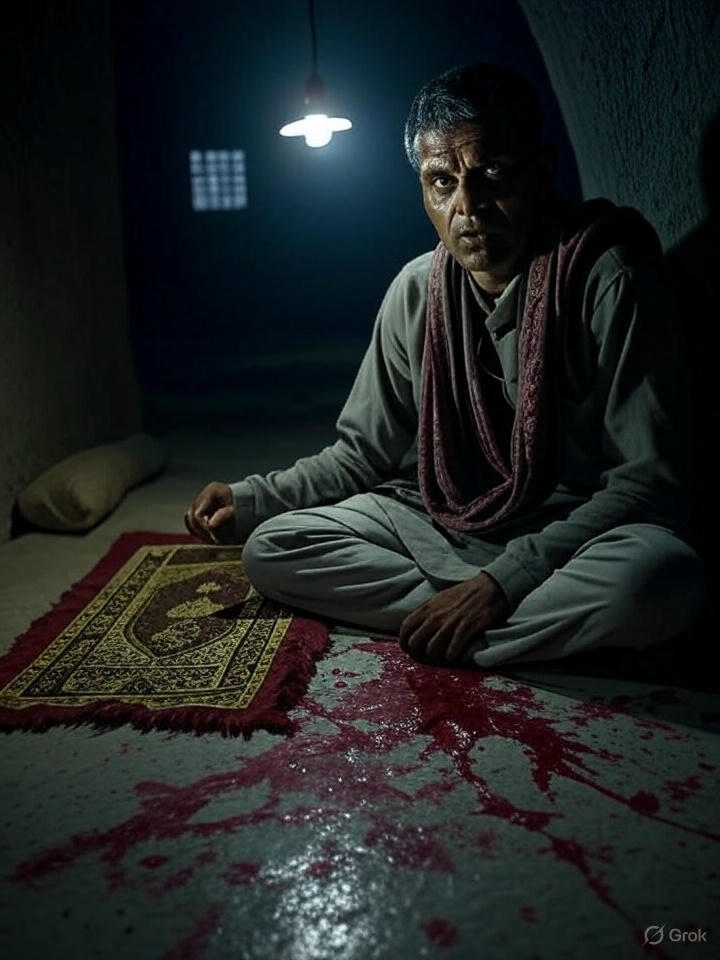
The Blood Beneath the Lamp


The Blood Beneath the Lamp


The village of Laxminiya held its breath at night, as if the stars themselves were watching. In Nepal’s Madhesh plains, where dust clung to everything, a single flickering oil lamp in Anjali Yadav’s prayer room cast long, trembling shadows. By February 22, 2025, those shadows hid a horror so vile it would sear itself into the village’s soul.


Anjali, 20, was a spark in a world of ash. Her laughter once danced through the mud-brick lanes, her dreams of a better life whispered to her 10-month-old daughter, Meera, as she rocked her to sleep. But her husband, Hari Ram Yadav, was a storm cloud. His drug-soaked eyes saw betrayal in every glance Anjali gave. Neighbours knew the rhythm of their fights—shouts, crashes, then silence. That night, the silence came too soon.


It began with a slur, Hari’s voice thick with venom. “You’re not mine,” he growled, his hands twitching toward the knife on the table. The crack of his fist swallowed Anjali’s pleas. Then the blade. Blood sprayed across the prayer room, staining the altar where Anjali had burned incense for hope. Hari didn’t stop there. In a frenzy, he hacked at her body—her arms, her face, her chest—until she was less human than wreckage. The oil lamp flickered, casting crimson streaks on the walls. Meera slept in the next room, oblivious to the monster her father had become.


Hari’s rage cooled to calculation. He dragged Anjali’s remains to the prayer room’s dirt floor, clawing a grave beneath the sacred mat. Each shovelful hid his sin, but the stench of death lingered. By dawn, he was gone, Meera tucked in his arms like a stolen prize. He spread lies to the neighbours—“She ran off with another man”—his voice calm, his eyes darting like a hunted animal. Laxminiya believed him, at first.


For seven days, the house stood locked, a tomb in plain sight. The village whispered about Anjali’s absence, but fear kept them at bay. On February 29, a child’s stray ball rolled too close to the house, and a neighbour caught the faint, putrid smell. Police arrived, their flashlights cutting through the prayer room’s gloom. They dug, and the earth gave up its secret: Anjali, her body a mangled ruin, her face obliterated. A bloodied knife lay nearby, etched with the word “Betrayed.” The village screamed. The nation froze.


Hari and Meera had vanished. Police found his abandoned bike near the Indian border, but the trail went cold. On X, the story ignited like wildfire. “He butchered her in their prayer room? And took the baby? This is beyond evil,” one user raged. Another posted a blurry photo of a man resembling Hari in a nearby town, sparking frenzied speculation. Was he a lone madman, or had he fled to a network hiding him? Some whispered of a cult, others of a drug cartel. Meera’s fate haunted every post: “That poor child. Is she even alive?”


Laxminiya is a ghost town now, its people afraid to light their lamps. Anjali’s mother weeps daily, clutching Meera’s tiny blanket. The prayer room, once a sanctuary, is boarded up, but some swear they hear cries from within at night. Hari remains a phantom, his shadow stretching across the plains. Somewhere, he carries Meera—or her memory—through a darkness no light can touch.
Readers, this nightmare isn’t over. Where is Hari hiding? Is Meera still out there? Drop your theories in the comments, and let’s hunt for answers in this chilling mystery.


All credit goes to the respective owners.

yellow thoughts💛

Friday, April 4, 2025

The Girl in the Water: The Chilling Mystery of Elisa Lam


The Girl in the Water: The Chilling Mystery of Elisa Lam


When the truth is stranger than fiction… and far more terrifying.


A Hotel With a Dark Reputation

In the heart of Los Angeles, tucked between neon lights and shadowed alleyways, stands the Cecil Hotel. Once built to be a beacon of hospitality, it instead became a hotspot for mystery, murder, and madness. Over the decades, the hotel has gained notoriety as a breeding ground for strange disappearances and death.

In February 2013, the Cecil added yet another name to its dark legacy:
Elisa Lam.


Who Was Elisa Lam?

Elisa was a bright 21-year-old student from Vancouver, Canada. Like many others her age, she dreamed of adventure. She travelled alone, chronicling her experiences on Tumblr—sharing book quotes, photos, and candid thoughts on mental health and loneliness.

Her last stop: Downtown Los Angeles.
Her last known location: Room 506, Cecil Hotel.


Elevator Footage That Broke the Internet

When Elisa went missing, hotel staff and police combed through security footage. What they found was deeply unsettling.

In the surveillance video:

  • She steps into the hotel elevator.

  • Press multiple buttons.

  • Hides in the corner.

  • Peeks into the hallway—then suddenly retreats.

  • Makes strange, jerky hand movements, as if speaking to someone invisible.

And the elevator? It never closes.

The clip went viral—millions of views. No one could explain her behaviour.

Was she hallucinating? Being followed? Possessed?


The Horrifying Discovery

Nineteen days passed. Still no sign of Elisa.

Then the hotel guests began to complain.
The tap water was dark. The pressure was low.
And it had a strange… taste.

A maintenance worker climbed to the rooftop to investigate the water tanks.

Inside one of them, floating face-up—was Elisa.


The Unanswered Questions

What followed was a whirlwind of confusion and speculation:

  • How did she get onto the roof? The doors were locked and alarmed.

  • How did she open the heavy metal lid of the tank alone?

  • Once inside, how did she expect to get out? There were no ladders.

  • Her phone was never found.

  • Her clothes were in the tank, too—floating beside her.

The official ruling?
Accidental drowning brought on by her mental health condition (bipolar disorder).

But for many, the story didn’t sit right.


A Hotel Steeped in Darkness

The Cecil Hotel is no stranger to death. It’s been linked to serial killers, countless suicides, and unsolved disappearances.

Some believe Elisa fell victim to the hotel’s dark past—perhaps a spiritual echo of its violent history. Others argue the case highlights the real, raw struggles of untreated mental illness.

But the internet remains divided.
Was it a tragic accident?
Or something far more sinister?


Final Thoughts

Elisa Lam left behind no witnesses.
Only a video.
A rooftop.
And a story that still haunts us over a decade later.

Sometimes the scariest mysteries… are the ones we almost understand.

🔎 Have theories of your own? Drop them in the comments. Let’s unravel this mystery together.
💀 Stay curious, stay sceptical… and never ignore the elevator that won’t close.


All credit goes to the respective owners.

Yellow thoughts💛


Thursday, January 23, 2025

The mystery of room no. 1046

 The mystery of room no. 1046


It was a cold morning in Kansas City when a man checked into the Hotel President, a tall, quiet building standing firm against the chilly winds of January 1935. His name, at least according to the hotel register, was Roland T. Owen, but there was little else known about him. He had no luggage, and his appearance was unremarkable—just an ordinary man, perhaps in his late twenties, dressed simply in a suit. He asked for a room on the 10th floor, and, after some brief exchanges with the hotel staff, he was given the key to Room 1046.

For a few days, everything seemed normal. Hotel employees reported that Owen was a quiet man who hardly spoke, mostly keeping to himself. Occasionally, they heard him on the phone, but never long enough for anyone to glean anything of importance. The most peculiar thing was the way he’d sometimes behave in the hallways: walking around the floor, pacing as if anxious or waiting for someone.

Then, on the night of January 3rd, things took a dark turn.
A maid, who was cleaning nearby, was startled by strange noises coming from Room 1046. The sounds were unnerving—yelling, shouting, followed by what seemed like the unmistakable sound of a struggle. Concerned, she went to the door and knocked, but received no answer. She knocked again. Finally, she heard a weak voice from inside: "Everything’s fine. Nothing to worry about."

Suspicious but uncertain, she left the hallway, but the night had only just begun. Around 7:00 PM, a bellboy was called to the room by Owen himself, who asked for a drink. The bellboy was surprised to see the man looking dishevelled, his shirt half undone. He didn’t seem hurt, but there was an odd sense of tension in the air. The bellboy went to fetch the drink, but when he returned, Owen was gone—only a few minor personal items remained in the room, and the bed was untouched.

But just after midnight, the horror truly unfolded.
A brutal scene awaited the hotel staff when they finally entered Room 1046 at the request of the police. Owen’s body was found in the room, lying on the floor in a pool of blood. He had been stabbed multiple times, and his wounds were horrific, a mixture of deep cuts and abrasions. Strangely, there were no signs of forced entry. No one had heard anything more after the struggle earlier, and the room was eerily quiet now.

The investigation quickly hit dead ends. The man’s true identity remained a mystery, as did the events leading to his death. No one in the hotel recalled ever seeing him before, and his personal effects offered little to go on. No fingerprints, no address, and no relatives came forward to claim him.

The most bizarre detail? Roland T. Owen wasn't even his real name. But no one ever learned what his true identity was. Even more chilling was the cryptic message he had left with the bellboy on the night of his death. As he had made his way out of the room earlier, Owen had said, “I’ll be back in a minute.”

He never returned.
Rumours began circulating, and wild theories sprouted. Had Owen been involved in something sinister? Was he being chased by someone? The truth behind Room 1046 and the death of Roland T. Owen remained elusive, drawing people into its mystery. Was he a victim of a love affair gone wrong, or was it something darker—a message to someone, a threat that had followed him through the halls of the hotel?
The case, never solved, continues to baffle and intrigue.


The Investigation


By the time Detective James Reilly arrived at the scene, the room had already been sealed off. The body of Roland T. Owen was sent to the coroner, but the cause of death was clear: he had been stabbed multiple times. His throat had been slit with surgical precision.

 No one had checked in under that name. No one came forward to claim his body. His personal belongings were sparse, with only a suitcase filled with basic clothes, a few toiletries, and nothing that pointed to who he really was.

The hotel staff had no memory of him beyond the last two days. He had made no mention of where he was from or where he was going. It was as though he had just… appeared.

Detective Reilly questioned the hotel staff, but none could explain what had happened that night. They reported hearing strange sounds from Room 1046—the soft, low hum of a phone conversation that sounded more like a whisper than a regular call. The bellboy who’d made rounds reported seeing Owen standing near the door late at night, looking down the hallway as if expecting someone. 

The only clue, apart from the body, was a strange set of scratches on the walls, too faint to be easily explained.


The Unsolved Case


Despite hours of investigation, Detective Reilly came up with little. There was no sign of forced entry, no indication that Owen had been expecting anyone. His death didn’t seem to be connected to the robbery, and there were no witnesses who could shed light on what happened.

What had driven Roland T. Owen to choose Room 1046? Why had he seemed so unsettled, so terrified, when the staff checked on him? And who—or what—had attacked him in the dead of night?

Theories about Room 1046 started to emerge. Whispers of a curse that haunted the room—a malevolent force that claimed the lives of anyone who stayed too long—began circulating. The scratches on the walls, the eerie silence, the phone line cut at the exact moment of Owen’s death—could they all point to something darker than just a simple murder?

In the end, Roland T. Owen’s true identity was never discovered. No one claimed his body, and the case went cold. Room 1046 was locked away, and never rented out again. The hotel was sold to new owners, but the mystery of *Room 1046* remained, a shadow hanging over the building.

And still, to this day, no one knows who Roland T. Owen really was—or what happened to him in *Room 1046* that night. The whispers in the walls are said to still be heard by those brave enough to listen.


There have been a few interesting developments over the years that have added some layers to the case. While no new concrete evidence has been found to conclusively solve the case, there have been recent findings and theories that have sparked new interest in the investigation:

The Discovery of New Clues


In 2019, a team of researchers studying unsolved historical crimes uncovered a few more pieces of information. They discovered *old police files* that had been previously overlooked. The files included *additional witness statements* that hadn't been made public, most notably one from a guest who had stayed on the same floor during Owen's visit.

This guest reported hearing strange *whispers and muffled voices* coming from Room 1046 in the days leading up to Owen's death. The guest also claimed that Owen had been *arguing with someone* in the hallway late one night. This witness described Owen's voice as "agitated" but could not identify the other person he was speaking with. Could this person have been the one who attacked Owen? The witness’s statement suggests a possible confrontation just hours before the murder.


A Possible Identity Connection


In 2021, a historian specializing in unsolved crimes published a book that explored the possibility that *Roland T. Owen* was actually the alias of a man named *Jimmie R. Hudson*, a known con artist with a history of fraudulent activities. The historian argued that Hudson had been involved in several shady dealings across the Midwest before disappearing around the time of Owen’s death. 

One key point that gave this theory weight was the fact that Hudson had been known to use different aliases during his schemes. Could *Roland T. Owen* have been yet another one of his fake identities? If so, what exactly was he running from? Some theorists speculate that Owen’s life may have been tangled in a criminal network, and the attack could have been the result of a *botched deal* or a dispute with someone from his past.


The Hotel’s Hidden History


In 2022, an investigation into the hotel’s *original blueprints* revealed a surprising detail: *Room 1046* was located in an area of the hotel that had originally been built as a series of *storage rooms* and *offices, not intended for guest use. In fact, there was a hidden passageway behind the room that led to an area that was once used for **staff-only access*. Could this have played a role in the crime? 

Some believe that the room’s strange design and location could have been connected to the murder, suggesting that whoever attacked Owen had *access to the hotel’s secret passages, allowing them to **leave without being detected*. If someone had been able to enter the room through these hidden routes, it would explain why there were no signs of forced entry and why the door had been locked from the inside.
 

The Alleged Involvement of the Hotel’s Staff

Another recent development came in 2023 when a *historian of true crime* suggested that *someone from the hotel’s staff* might have been involved. NA's analysis of witness statements from the time indicated that some staff members had a more intimate knowledge of Owen's behaviour, suggesting they may have had a personal connection to him. 

For example, the bellboy who had reported seeing Owen late at night had also mentioned that *Owen had been receiving cryptic phone calls* during his stay. Could one of the hotel staff have been in on this? The theory suggests a *potential cover-up* or a botched involvement in Owen’s activities.


Lingering Questions


Despite these recent findings, the case remains full of *unanswered questions*:

- *Was Roland T. Owen truly an alias, and if so, what was his real identity?*
- *Who was he arguing with the night before his death?*
- *Why was Room 1046, a room known for its eerie history, so specifically chosen?*
- *Could the hotel staff have known more than they let on, or were they simply caught in the web of an increasingly dark and dangerous situation?*
- *What was the significance of the scratches on the wall, and did they hold a deeper meaning that is yet to be uncovered?*

Until these questions are answered, Room 1046 will continue to be a place of *mystery and speculation*, drawing researchers, historians, and curious minds to try to unravel the truth behind Roland T. Owen’s brutal and puzzling death. The recent findings have reopened the case, but one thing remains certain: the story of Room 1046 is far from over.


All the credit goes to the respective owners.
Yellow thoughts💛

The Scent That Refused to Forget

 The Scent That Refused to Forget It happens without warning. You’re walking through a crowded street, lost in routine, when the air shifts ...